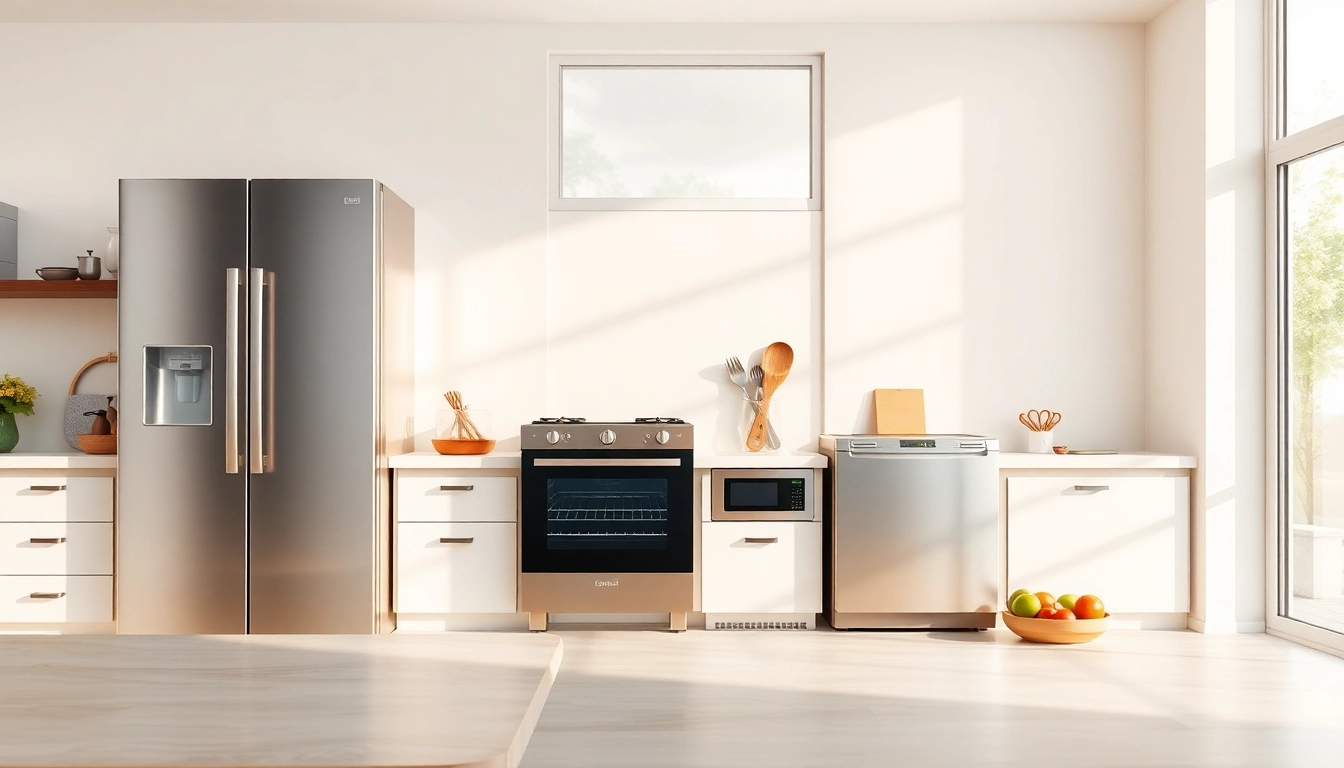
Introduction to Home Appliances
Home appliances are essential tools that enhance our daily lives by simplifying household tasks. These devices range from smart refrigerators to efficient washing machines, breaking down complex chores into manageable actions. Understanding the significance of home appliances in our modern lives is critical for making informed decisions in both functionality and style.
What Are Home Appliances?
Home appliances are large or small machines designed to perform specific functions within the home. Typically categorized into major and minor appliances, they contribute to our comfort and convenience. Major appliances include items like washers, dryers, ovens, and refrigerators, while minor appliances comprise microwaves, toasters, blenders, and coffee makers. The primary purpose of these devices is to facilitate tasks that enhance our quality of life.
Types of Home Appliances You Need
While needs may vary by household, certain types of home appliances are generally considered essential. These include:
- Cooking Appliances: Ovens, stoves, and microwaves.
- Refrigeration Appliances: Refrigerators and freezers.
- Cleaning Appliances: Washing machines, dishwashers, and vacuum cleaners.
- Heating and Cooling Appliances: Air conditioners, heaters, and fans.
Understanding which appliances are vital for your household can streamline your purchasing process and improve your daily life comfort.
Benefits of Upgrading Your Home Appliances
Investing in modern home appliances brings numerous advantages. Upgrading can lead to significant energy savings due to advanced technology, providing cost reduction on utility bills. New appliances often feature enhanced performance standards, offering improved functionality and efficiency, and many models are designed with user-friendly interfaces. Furthermore, modern appliances contribute to a sleek aesthetic in the home and often come equipped with smart technology, allowing for remote management and programming through apps.
Choosing the Right Home Appliances
When venturing into the market for home appliances, several considerations must be taken into account to ensure you select the right models for your space and needs.
Factors to Consider When Buying
Choosing the right home appliance requires careful deliberation on numerous factors:
- Budget: Determine your spending limit to avoid overspending.
- Features: Assess features that align with your lifestyle, such as smart integrations or specific functionalities.
- Brand Reputation: Research brands with positive reviews for reliability and customer service.
- Warranty and Support: Evaluate warranty options and customer support availability.
Energy Efficiency and Sustainability
In today's environmentally conscious world, energy efficiency is paramount when selecting home appliances. Look for Energy Star-rated products that consume less energy and are environmentally friendly, reducing carbon footprints. Understanding the long-term operational costs in relation to these appliances can lead to savings in both financial and environmental terms.
Size and Space Management
Understanding the dimensions of potential appliances is crucial, especially in smaller homes or kitchens with limited space. Measure available areas and consider the layout to ensure that appliances fit well without obstructing movement.
Popular Home Appliances for Every Kitchen
The kitchen is often regarded as the heart of the home, and having the right appliances can enhance this vital space significantly.
Essential Cooking Appliances
Cooking appliances often form the core of a functional kitchen. Essential appliances include:
- Stoves: Gas or electric cooking surfaces for versatile meal preparation.
- Ovens: Convection and conventional ovens for baking and roasting.
- Microwaves: Quick heating solutions for busy lifestyles.
Refrigeration Solutions
Refrigerators and freezers play a crucial role in preserving food and reducing waste. When selecting refrigeration solutions, consider capacity, design, and energy efficiency to optimize storage while maintaining performance.
Cleaning and Maintenance Appliances
Maintaining cleanliness is paramount, and the right appliances can contribute to a hassle-free experience. Key cleaning appliances include:
- Dishwashers: Efficient washing and drying of dishes, saving time and water.
- Washing Machines: Essential for laundry care, available in various capacities and styles.
- Vacuum Cleaners: Modern options offer various features tailored for different flooring types.
Innovative Features in Home Appliances
The development of technology has propelled home appliances into a new realm of innovation, emphasizing convenience and user interaction.
Smart Technology in Kitchen Appliances
Smart technology allows home appliances to connect via Wi-Fi, enabling remote control and monitoring through smartphones or tablets. Notable features include programmable settings and notifications, providing users with enhanced flexibility and control.
Latest Trends in Home Appliances
Current trends emphasize sustainability, compact designs, and integration with smart home systems. Consumers gravitate towards energy-efficient appliances that not only offer superior performance but also promote eco-friendliness and reduced energy bills.
User-Friendly Appliance Designs
Modern appliances prioritize ergonomics and intuitive interfaces, allowing users to operate devices with ease. Manufacturers dedicate resources to ensure that appliances are designed with the user in mind, focusing on simplifying tasks without compromising functionality.
Maintenance Tips for Your Home Appliances
Regular maintenance is essential to prolong the lifespan and performance of home appliances. Here are some vital upkeep tips.
Regular Cleaning and Care
Consistent cleaning routines can prevent build-up and malfunctions. Dusting, degreasing, and descaling should be part of regular maintenance schedules for various appliances, enhancing performance and extending lifespan.
Signs Your Appliances Need Repair
Recognizing warning signs is crucial. Common signs include unusual noises, decreased efficiency, unusual smells, or leaks. If these indicators emerge, it’s essential to consult a professional technician for assessment and repairs.
Extending Appliance Lifespan
Ensuring that appliances last as long as possible involves routine checks and flossing out any built-up residue. Additionally, regularly replacing filters, seals, and other wear-and-tear components can significantly extend appliance lifespan.
Frequently Asked Questions
1. How can I improve the energy efficiency of my home appliances?
Regular maintenance, opting for Energy Star products, and using appliances only as needed can enhance energy efficiency.
2. What size appliances should I choose for a small kitchen?
Focus on compact, space-saving models. Consider multi-functional appliances to maximize efficiency in limited spaces.
3. How often should I clean my appliances?
Regular cleaning schedules are recommended. Kitchen appliances should be cleaned monthly, while other appliances can be maintained quarterly.
4. Are smart appliances worth the investment?
Smart appliances often enhance convenience and can lead to energy savings, making them a worthwhile investment for many households.
5. What should I do if my appliance starts making unusual noises?
Unusual noises can indicate mechanical issues. Stop using the appliance and consult a technician for diagnosis and repairs as needed.